🏡 Buying Property in Dubai Doesn’t Have to Feel Complicated – If You Know the Right Order
For many international buyers and investors, Dubai feels exciting — but also unfamiliar.
Different rules.
Different terminology.
Different buying process than the UK, Europe, or the USA.
That’s why one of the most common questions I hear from serious buyers is:
“Can you explain the exact process of buying property in Dubai — step by step — without the sales noise?”
This guide does exactly that.
It’s written for:
✔ UAE residents and expats
✔ GCC buyers
✔ UK, European, Turkish, and US investors
✔ First-time buyers and experienced investors
Whether you’re buying remotely or on the ground, this is a clear, investor-first walkthrough of how to buy property in Dubai in 2026 — written in plain language, with no shortcuts and no pressure.
Why Understanding the Buying Process Matters More Than Ever
Dubai’s real estate market is fast, transparent, and efficient — but only if you understand the sequence.
Buyers who skip steps or rely purely on emotion often:
• Overpay
• Miss legal details
• Choose the wrong property type
• Regret timing decisions
Those who understand the process move calmly, negotiate better, and protect their downside.
Before starting, it helps to understand where the market is heading overall. A useful reference is the Dubai real estate market forecast 2026.
Step 1: Define Why You’re Buying (This Comes Before Budget)
Most people start with price. Smart buyers start with purpose.
Ask yourself honestly:
✔ Is this for rental income?
✔ Long-term capital growth?
✔ Personal use or relocation?
✔ Portfolio diversification outside my home country?
Your answer affects:
• Location choice
• Property type
• Financing approach
• Exit strategy
If you’re investing, it’s worth reviewing real estate investment strategies before looking at listings.
Step 2: Set a Realistic Budget (Including All Costs)
Dubai property prices are transparent — but buyers often forget the “extras.”
Your true budget should include:
✔ Property price
✔ Dubai Land Department (DLD) fee (4%)
✔ Registration & trustee fees
✔ Agency fee (where applicable)
✔ Furnishing (if renting)
✔ Service charge reserve
A clear breakdown is explained in detail in how much money you need to buy property in Dubai.
Never plan to spend 100% of your available cash. Flexibility is part of smart investing.
Step 3: Choose the Right Community (Not Just the Right Apartment)
In Dubai, the community matters more than the floor plan.
A great unit in the wrong area underperforms.
An average unit in the right area performs consistently.
Communities often chosen by investors include:
Jumeirah Village Circle (JVC) for yield, Business Bay for central demand, Dubai Marina for liquidity, and
Dubai Hills Estate for long-term family demand.
Understanding tenant and buyer behaviour is critical. Use Dubai real estate demand insights to guide decisions.
Step 4: Decide Between Ready Property and Off-Plan
This choice affects timing, cash flow, and risk.
Ready property suits buyers who want:
✔ Immediate rental income
✔ Lower execution risk
✔ Easier financing
Off-plan property suits buyers who want:
✔ Lower entry prices
✔ Flexible payment plans
✔ Capital appreciation over time
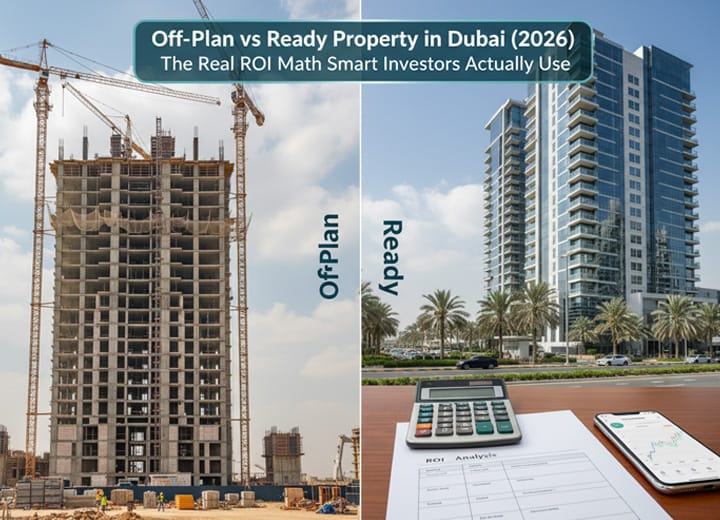
If you’re unsure which fits your situation, compare both using off-plan vs ready property in Dubai.
Step 5: Make an Offer and Negotiate Calmly
Once you’ve selected a property, an offer is submitted.
In Dubai:
✔ Negotiation is normal
✔ Sellers expect discussion
✔ Terms matter as much as price
Strong buyers negotiate on:
• Price
• Payment timelines
• Included furnishings
• Transfer timing
This is where preparation gives you leverage — especially during quieter market periods explained in best time to buy property in Dubai.
Step 6: Sign the Memorandum of Understanding (MOU)
The MOU outlines:
✔ Purchase price
✔ Deposit amount (usually 10%)
✔ Timelines
✔ Conditions
Once signed, both parties are committed unless terms are breached.
This stage is straightforward — but legal clarity matters. Review common questions in Dubai real estate legal FAQs.
Step 7: No Objection Certificate (NOC)
The developer issues an NOC confirming:
✔ No outstanding service charges
✔ Approval for ownership transfer
This protects the buyer and ensures a clean handover.
Step 8: Ownership Transfer at the Trustee Office
This is the final step.
At transfer:
✔ Funds are exchanged
✔ Title deed is issued digitally
✔ Ownership is officially registered
Once completed, you are the legal owner of the property.
Dubai’s registration system is one of the most efficient globally — a key reason foreign investors feel secure. Learn more in the real estate regulatory landscape.
Step 9: Rent, Hold, or Reposition the Property
After purchase, your strategy continues.
You may:
✔ Rent long-term
✔ Explore short-term rentals
✔ Hold for appreciation
✔ Refinance later
If you’re not based in Dubai, professional property management services make ownership genuinely hands-off.
Common Buying Mistakes to Avoid
Slow down if:
• You’re rushing due to “limited availability” pressure
• You haven’t reviewed service charges
• You don’t understand exit demand
• You’re buying without a plan
Before committing, revisit when NOT to invest in Dubai property and how to avoid real estate scams in Dubai.
Saleem Karsaz’s Perspective: Process Creates Confidence
Most stress in property buying comes from uncertainty — not risk.
When buyers understand the process clearly, decisions become calmer, smarter, and more strategic.
Dubai rewards prepared buyers. The system works when you work with it — not around it.
That mindset is central to real estate industry leadership and Founder of Dubai Real Estate.
Final Thoughts: Buying Property in Dubai Can Be Simple and Secure
In 2026, Dubai remains one of the easiest global cities for foreigners to buy property — provided you follow the correct steps in the right order.
Whether you’re investing for income, growth, or long-term security, clarity is your biggest advantage.
If you want guidance that focuses on logic, data, and long-term outcomes — not pressure — you can begin with a strategy-led discussion at SaleemKarsaz.com.